

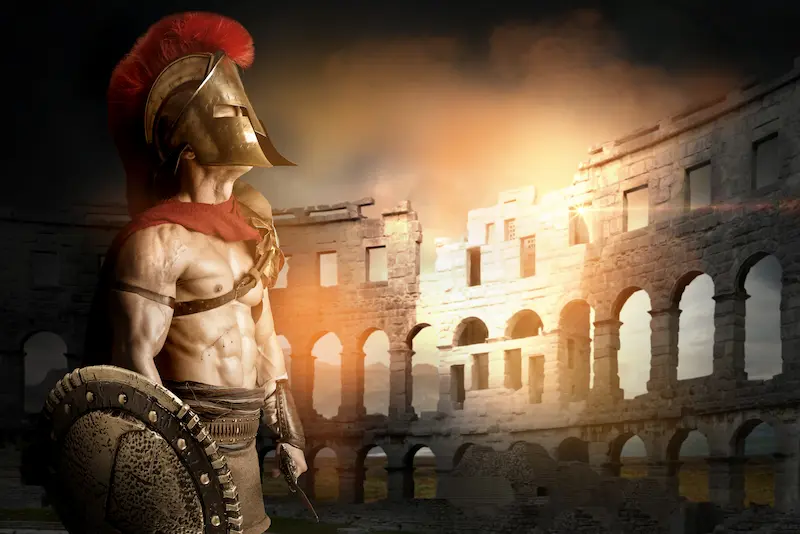
Today, the Verona Arena is known for opera, concerts, and spectacular live shows. But in Roman times, the entertainment was very different. Two thousand years ago, this same amphitheater echoed with the clash of steel, the roar of wild animals, and the cheers of thousands of spectators hungry for excitement.
The main stars of these events were the gladiators. They were highly trained fighters, often enslaved, prisoners of war, or volunteers seeking fame and fortune. Each gladiator specialized in a particular fighting style, with specific weapons and armor. Some carried a large shield and short sword, others fought with a trident and net, and some were lightly armed but extremely fast.
Contrary to popular legend, not every fight ended in death. Gladiators were expensive to train and maintain, and their survival was profitable for the organizers. Many combats were highly choreographed and supervised, with referees on the sand to control the action. When a fighter was wounded or defeated, the final decision depended on the editor of the games and sometimes on the reaction of the crowd.
The Arena also hosted venationes, shows that featured exotic animals such as lions, bears, or wild boars. These events were meant to demonstrate Rome’s power over nature and its distant territories. The underground corridors and cages beneath the arena floor allowed animals and fighters to appear dramatically through trapdoors and hidden entrances.
Beyond the violence, these spectacles were deeply social events. They were funded by emperors, governors, or wealthy citizens to win popularity and demonstrate generosity. Attending the games was a public ritual that united people from all backgrounds, from local citizens to visiting merchants and travelers.
When you walk on the steps of the Verona Arena today, you are standing where Roman spectators once sat, reacting to every move in the sand below. Imagining the armor shining under the sun, the flags, the music, and the energy of the crowd brings the ancient amphitheater back to life.
Even though the gladiator games ended long ago, the spirit of shared emotion remains. The Arena still gathers thousands of people for powerful experiences, proving that while the spectacles have changed, the human desire for drama, beauty, and celebration has not.

